

If you have ever listened to a professional podcast, a chart-topping vocal track, or a crisp voiceover and wondered, “How do they sound so clear?” the answer is almost always the hardware. Specifically, they are likely using a condenser microphone. But what is a condenser microphone, exactly? In simple terms, it is the high-fidelity standard for capturing audio, designed to pick up the delicate nuances and “air” in a performance that other microphones simply miss.
Entering the world of audio gear can feel overwhelming. You are bombarded with terms like “phantom power,” “polar patterns,” and “frequency response,” and it is easy to get lost in the noise. That is where this guide comes in. This isn’t just a list of specs; it is a roadmap. We have designed this article to be the ultimate resource for anyone—from bedroom producers to aspiring streamers—who wants to stop guessing and start recording professional-quality audio.
We will break down exactly how these microphones work, review top-tier options for every budget, and provide a deep-dive buyer’s guide that explains the technical benefits in plain English. By the end of this read, you won’t just know what a condenser mic is; you will know exactly which one belongs on your desk to elevate your sound from amateur to pro.
Top Product Reviews
Here are three distinct condenser microphones that represent the best value, performance, and industry standards available today.
1. The Budget King: Audio-Technica AT2020
For over a decade, the Audio-Technica AT2020 has been the gatekeeper to professional home recording. It is widely considered the “first real microphone” for thousands of creators, and for good reason. The AT2020 manages to strip away the unnecessary bells and whistles to focus entirely on sound quality. Unlike cheap consumer mics that boost bass artificially to sound “radio-ready,” the AT2020 offers a surprisingly flat and honest response. Buy Now!!
When you record vocals with this mic, you get exactly what you put in. It handles high-frequency details—like the breathiness in a singer’s voice or the crisp attack of an acoustic guitar strum—with a clarity that rivals microphones costing three times as much. It is built with a rugged metal chassis, meaning it can survive the occasional knock on a desk.
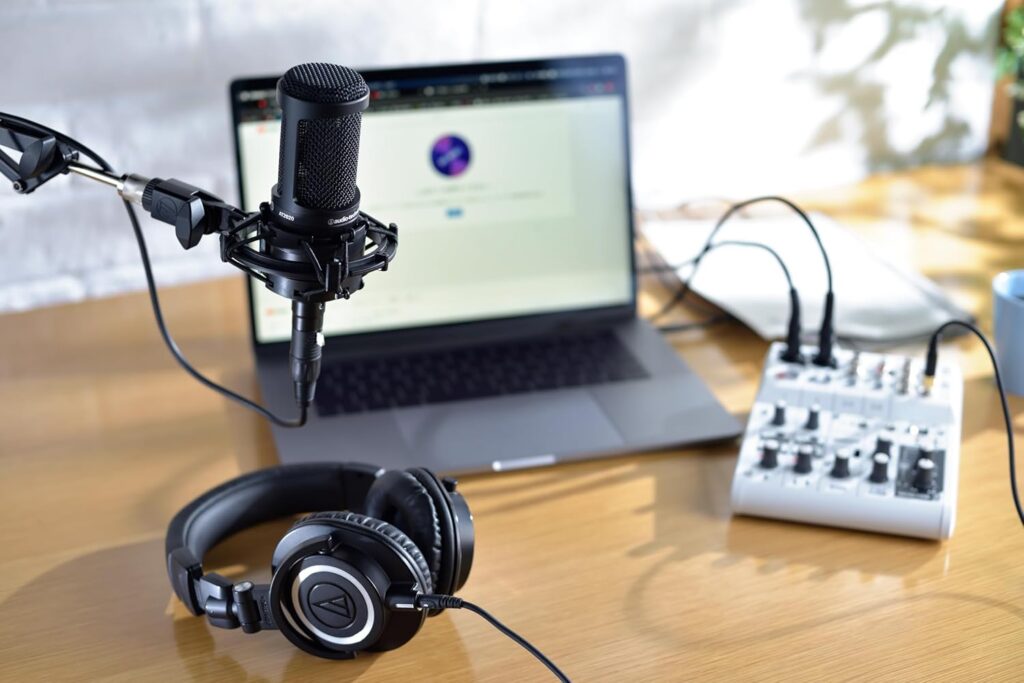
However, buyers should note that this is a “no-frills” experience. It requires an XLR interface and 48V phantom power to operate. It doesn’t come with a shock mount or a pop filter, so you will need to factor those into your budget. But if your goal is to get the best possible raw audio for under $100, the AT2020 remains the undisputed champion. It is the perfect starting point for understanding what a condenser microphone is capable of in a home studio.
2. The Quiet Achiever: RØDE NT1 (5th Generation)
If the AT2020 is the entry point, the RØDE NT1 is the workhorse you graduate to. RØDE has famously marketed the NT1 as the “world’s quietest studio microphone,” referring to its incredibly low self-noise (just 4dBA). In practical terms, this means when you crank up the gain to record a quiet whisper or a delicate finger-picking guitar part, you won’t hear that annoying “hisss” in the background that plagues cheaper gear.
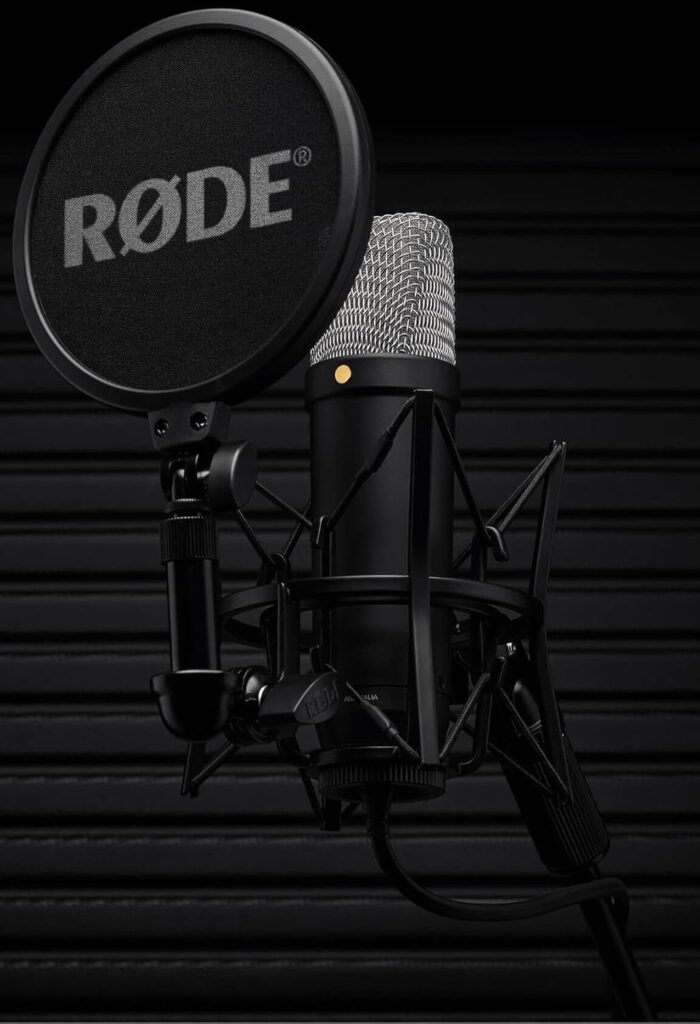
The 5th Generation model is particularly special because it is a hybrid. It features a patent-pending “Dual Connect” output, meaning you can plug it into an audio interface via XLR or plug it directly into your laptop via USB-C. This flexibility is a game-changer for buyers who want high-end sound now but haven’t bought an expensive interface yet. BUY NOW!!
Sonically, the NT1 is known for a “silky” top end. It flatters the human voice, smoothing out harsh sibilance (those sharp ‘S’ and ‘T’ sounds) while adding a warm richness to the bottom end. It comes as a full kit with a high-quality shock mount and pop filter, providing immediate value. For buyers looking for a “buy it for life” option that bridges the gap between digital convenience and analog purity, this is the ultimate pick.
3. The Industry Standard: Neumann U 87 Ai
To understand the peak of condenser technology, we have to talk about the Neumann U 87 Ai. Walk into almost any professional recording studio in Los Angeles, London, or Nashville, and you will find this microphone set up in the vocal booth. It is the gold standard against which all other microphones are measured.
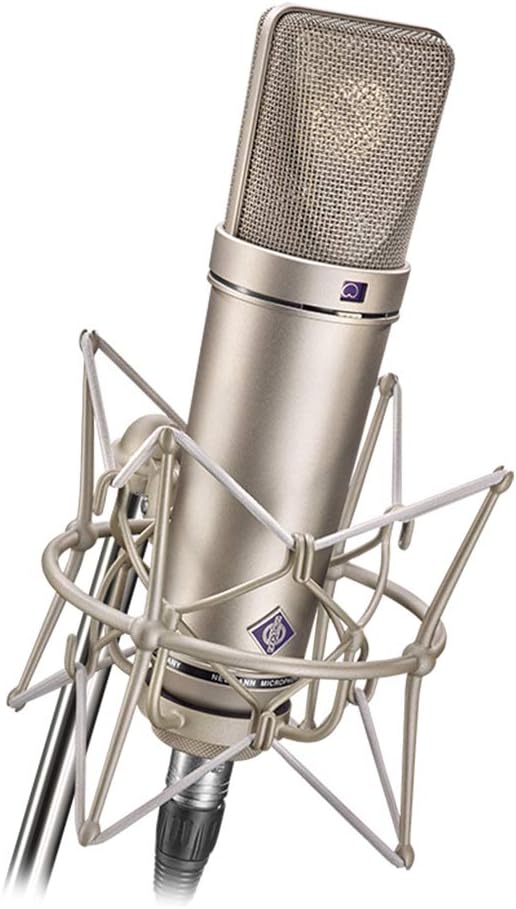
The U 87 Ai is a multi-pattern large-diaphragm condenser. Unlike the previous two mics, which only record what is directly in front of them, the U 87 allows you to switch patterns to record the whole room (Omnidirectional) or a duet singing on opposite sides of the mic (Figure-8). This versatility makes it a Swiss Army knife for engineers.
The sound signature is legendary—authoritative, present, and incredibly detailed without being harsh. It has a unique way of making vocals “sit” perfectly in a mix without needing massive amounts of EQ. However, the price tag is substantial. This is a significant investment for serious professionals. Buyers need to understand that owning a U 87 also requires a high-end preamp and a treated room to truly hear the benefits. If you have the budget and the acoustic environment, the U 87 isn’t just a microphone; it’s a career asset. BUY NOW!!
Buyer’s Guide: How to Choose the Right Condenser Mic
Choosing the right microphone is about matching technical specifications to your specific recording environment. Here is what you need to know to decipher the spec sheets and understand the benefits.
1. Diaphragm Size: Large vs. Small When asking “what is a condenser microphone,” you are usually picturing a Large Diaphragm Condenser (LDC). These mics (like the ones reviewed above) use a capacitor plate larger than an inch.
- The Benefit: LDCs are more sensitive and tend to have a “flattering” sound. They naturally deepen low frequencies, giving vocals that “larger than life” broadcast quality. They are the go-to for vocals and podcasting.
- Small Diaphragm Condensers (SDCs): These look like pencils. They are technically more accurate and respond faster to sound. Use these for instruments like piano, acoustic guitar, or cymbals where capturing the exact reality is more important than flattering the sound.
2. Polar Patterns and Rejection The polar pattern defines the shape of the “hearing” zone of the microphone.
- Cardioid: This is the most essential pattern for home studios. It captures sound from the front and rejects sound from the back.
The Benefit: If you are recording in an untreated room (like a bedroom), a Cardioid pattern minimizes the sound of your computer fan or traffic outside the window behind the mic. It focuses the listener’s attention solely on your voice
3. Sensitivity and Transient Response Condenser microphones are defined by their lightweight diaphragms, which move very easily.
- The Benefit: This leads to high “Transient Response.” When you snap your fingers, a condenser mic captures that sharp “crack” instantly, whereas a dynamic mic might smooth it out. This technical ability captures the emotion and texture in a performance, preserving the high-frequency “air” that makes a recording feel professional and expensive.
4. Connectivity: USB vs. XLR
- USB: The electronics (preamp and converter) are built into the mic.
- Benefit: Plug-and-play simplicity. Perfect for streamers and beginners.
- XLR: Requires an external Audio Interface.
- Benefit: Modular and upgradeable. An XLR mic you buy today will sound even better if you upgrade your preamp five years from now. It is the professional standard for a reason.
5. SPL Handling (Sound Pressure Level) Condenser mics are sensitive, but they can be overloaded by loud noises.
- The Benefit: Check the Max SPL rating. If you plan to record loud electric guitar amps or heavy metal drumming, you need a mic with a high SPL rating (usually above 130dB) or a “Pad” switch, which lowers the sensitivity so the mic doesn’t distort.
Additional Information & FAQ
To truly master your audio setup, you need to look beyond just the microphone itself. Here is the essential knowledge base to ensure you get the most out of your purchase.
Important Note: The Necessity of Phantom Power
One of the most common “rookie mistakes” is buying a condenser microphone, plugging it in, and hearing silence. Unlike dynamic mics (like the Shure SM58), a condenser microphone requires electricity to charge its internal capacitor plate. This is called +48V Phantom Power.
- If using an Audio Interface: Look for a button labeled “48V” and press it.
- If using a USB Mic: The power is drawn directly from your computer’s USB port, so you don’t need to worry about it.
The “Room” Factor
Because condenser microphones are so sensitive, they hear everything. This includes the sound of your voice bouncing off your bare walls. This creates a “boxy” or echoey sound that is the hallmark of amateur recordings.
- The Fix: You don’t need to rebuild your room. Heavy curtains, a rug on the floor, or a “reflection filter” placed behind the mic can drastically improve your audio quality.
Essential Accessories
- Pop Filter: A mesh screen placed between you and the mic. Condenser mics are very sensitive to “plosives” (the burst of air from ‘P’ and ‘B’ sounds). Without a filter, these sounds cause a low-frequency “thud” that ruins recordings.
- Shock Mount: A suspension cradle that holds the mic. It prevents vibrations from your desk (like typing on a keyboard or tapping your foot) from traveling up the stand and into the recording.
FAQ: Frequently Asked Questions
Q: Can I use a condenser microphone for gaming? A: Absolutely. In fact, most popular streamers use them because they make the voice sound clear and natural. However, because they pick up background noise (like mechanical keyboard clicks), you must use a noise gate software (like NVIDIA Broadcast or OBS filters) or position the mic on a boom arm close to your mouth.
Q: Is a condenser microphone better than a dynamic microphone? A: Not “better,” just different. A dynamic mic (like the Shure SM7B) is less sensitive and better at ignoring bad room acoustics, giving a radio-DJ sound. A condenser mic is more detailed and realistic. If you want high-fidelity detail, go Condenser. If you have a very noisy room, go Dynamic.
Q: How do I store my condenser microphone? A: Dust and humidity are the enemies of the delicate diaphragm. If you aren’t using the mic for a long period, cover it with a dust cover or put it back in its case. Never blow into the mic to test it; the moisture from your breath can damage the internal components over time.
Q: Why does my recording sound distorted? A: You are likely too close to the mic or your “Gain” is set too high on your interface. Aim for your audio levels to peak around -12dB to -6dB in your recording software. This leaves “headroom” so you don’t clip the audio if you suddenly get loud.
Conclusion
So, what is a condenser microphone? It is the bridge between a good idea and a professional production. It is the tool that captures the emotion in a vocalist’s breath, the intricate details of a narrator’s tone, and the reality of an acoustic performance.
While the technical jargon can be intimidating, the decision ultimately comes down to your goals. If you are just starting out, the Audio-Technica AT2020 offers an incredible price-to-performance ratio that will immediately upgrade your content. If you are looking for a silent, versatile workhorse, the RØDE NT1 is a long-term investment that will serve you for years. And if you are ready to invest in a legacy of sound, the Neumann U 87 remains the pinnacle of audio engineering.
Remember, the microphone is the first link in your audio chain. No amount of editing software can fix a bad source recording. By investing in a quality condenser microphone and understanding how to use it, you aren’t just buying gear; you are respecting your audience’s ears. We hope this guide helps you find the perfect voice for your creativity. Happy recording!